
When Algorithms Dream: The Future of Creative Machines
Not long ago, creativity was considered one of the most uniquely human abilities. Painting a masterpiece, composing music, or writing a compelling story seemed to require emotion, intuition, and imagination—qualities machines supposedly lacked. Today, that assumption is quickly fading. Algorithms can generate paintings, compose symphonies, write poetry, and even design products. While these systems don’t “dream” in the human sense, they are increasingly capable of producing creative work that surprises and inspires us. As artificial intelligence continues to evolve, the line between human creativity and machine-assisted creation is becoming more blurred, raising exciting possibilities and complex questions about the future of creativity.
The Rise of Creative Algorithms
Creative algorithms have emerged from rapid advances in artificial intelligence and machine learning. By analyzing massive datasets of images, music, literature, and other creative works, these systems learn patterns that allow them to generate entirely new content. Instead of simply copying existing material, modern AI models combine elements in novel ways, producing original pieces that often resemble the styles of human creators. This process allows machines to act as collaborators rather than just tools. Artists, designers, and writers are increasingly using AI systems to brainstorm ideas, generate drafts, or explore styles they might not have discovered on their own.
Art in the Age of AI
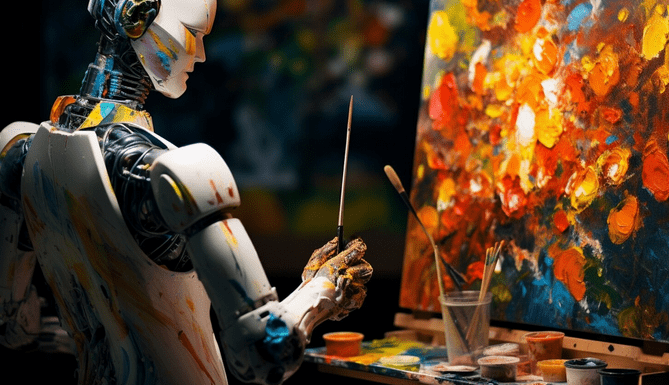
Visual art has become one of the most visible frontiers for creative machines. AI-powered tools can now generate detailed paintings, illustrations, and concept art within seconds. These systems can imitate classic styles, blend artistic influences, or create completely new aesthetics. For digital artists, this opens up new forms of experimentation. Instead of starting with a blank canvas, creators can work with AI-generated visuals as a starting point and refine them into polished pieces. While some critics worry that machine-generated art could devalue human creativity, many artists see it as a new medium, similar to photography or digital editing when they first appeared.
Music Composed by Machines
Music is another area where algorithms are making a surprising impact. AI models can analyze thousands of songs to understand rhythm, harmony, and structure. Using this knowledge, they can generate original compositions ranging from classical pieces to electronic beats. Some musicians use AI as a co-composer, feeding in melodies or chord progressions and letting the algorithm suggest variations. Others use AI-generated music for video games, films, or background soundtracks. Rather than replacing musicians, these tools often serve as creative partners that help spark new ideas and accelerate the creative process.
Writing With Artificial Imagination
Language models have dramatically changed the landscape of writing. From drafting blog posts to generating fiction, AI systems can now produce coherent and engaging text across many styles. Writers often use these tools for brainstorming, outlining, or overcoming writer’s block. Instead of replacing human authors, AI can act as an intelligent assistant that expands the range of possibilities during the writing process. The most compelling results usually come from collaboration, where humans guide the narrative direction and machines provide unexpected suggestions that push the story in new directions.
Creativity Beyond the Arts
Creative algorithms are not limited to traditional art forms. In fields like product design, architecture, and engineering, AI is being used to generate innovative solutions to complex problems. Generative design systems, for example, can produce hundreds of design variations based on specific goals such as strength, …